IEEE SMC-IT/SCC 2026
CALL FOR IEEE SMC-IT/SCC 2026 SUBMISSIONS
12th International Conference on Space Mission Challenges for Information Technology (SMC-IT)
17th International Conference on Space Computing (SCC)
Hilton Pasadena - Pasadena, California
August 3-6, 2026
Important Dates:
-
Abstract submission deadline for feedback: January 3, 2026 [optional]*
-
Abstract feedback response: January 16, 2026
-
Deadline for full papers and presentation-only abstracts: April 4, 2026
-
Registration site opens: April 4, 2026
-
Author acceptance notification: April 25, 2026
-
Final presentations deadline: June 27, 2026
-
Final camera-ready versions papers deadline: July 7, 2026
-
Conference: August 3-6, 2026*
*To help authors prepare their papers for submission, we offer to provide feedback on abstracts submitted in advance. This step is not compulsory, and authors may submit papers without previously submitting an abstract.
The International Conference on Space Mission Challenges for Information Technology (SMC-IT) and the Space Computing Conference (SCC) gather system designers, engineers, computer architects, scientists, practitioners, and space explorers with the objective of advancing information technology, and the computational capability and reliability of space missions. The forums will provide an excellent opportunity for fostering technical interchange on all hardware and software aspects of space missions. The joint conferences will focus on current systems practice and challenges as well as emerging hardware and software technologies with applicability for future space missions.
Systems in all aspects of the space mission will be explored, including flight systems, ground systems, science data processing, engineering and development tools, operations, telecommunications, radiation-tolerant computing devices, reliable electronics, space-qualifiable packaging technologies. The entire information systems lifecycle of the mission development will also be covered, such as conceptual design, engineering tools development, integration and test, operations, science analysis, quality control.
Feel free to also check out our LinkedIn page here: https://www.linkedin.com/company/ieee-space-computing-smcit/
2025 Speakers
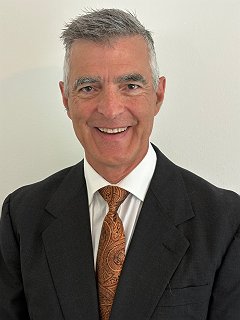
![]() Lt. Gen. Larry D. James USAF (Ret.) Lt Gen (USAF Ret) Larry D. James is the Strategic Advisor for SmartSat Cooperative Research Centre (CRC) in Adelaide Australia and a Distinguished Professor of Space Research and Innovation at Monash University in Melbourne Australia. At SmartSat CRC he provides advocacy, technical advice, and support for SmartSat’s R&D, innovation and educational activities. At Monash he engages with senior university leadership to further space curriculum expansion and development; help build government partnerships both domestically and globally; build research collaborations and opportunities; and support indigenous student development programs. View Profile |
![]() Dr. Linda Elkins-Tanton Lindy Elkins-Tanton is a planetary scientist, and the Principal Investigator of the NASA Psyche mission. On July 1, she became Director of the Space Sciences Laboratory at the University of California, Berkeley. Previously, she was an Arizona State University Regents and Foundation Professor in the School of Earth and Space Exploration, Director of the Department of Terrestrial Magnetism at the Carnegie Institution for Science, and faculty at MIT. Elkins-Tanton's research concerns the formation and evolution of rocky planets; volcanic activity and extinctions on Earth; as well as on effective teams and future-facing educational practices. Asteroid (8252) Elkins-Tanton is named for her, as is the mineral elkinstantonite. She is a member of the National Academy of Sciences, and the American Academy of Arts & Sciences. Elkins-Tanton received her B.S., M.S., and Ph.D. from MIT. |
![]() Dr. Tom Cwik Dr. Tom Cwik is Chief Technologist for NASA’s Jet Propulsion Laboratory. In this role, he provides strategic leadership for research in advanced technology and serves as the focal point for technology interactions with NASA, companies, universities, and the external research community. This includes being responsible for the management and development of NASA’s Space Technology Mission Directorate work at JPL and directing internal investments across the Lab. He is responsible for guiding the infusion of new technology into the Laboratory mission portfolio. View Profile |
The Honorable Aprille J. Ericsson The Honorable Aprille J. Ericsson was the Assistant Secretary of Defense for Science and Technology (S&T). In this role, she directed an organization responsible for the oversight, advocacy, and policy for the Department of Defense (DoD) S&T enterprise, including S&T workforce and laboratory infrastructure, Federally Funded Research and Development Centers, and University-Affiliated Research Centers. The ASD(S&T) office oversees a broad portfolio of S&T programs, including basic research, Small Business Innovation Research/Small Business Technology Transfer (SBIR/STTR), DoD Manufacturing Technology, and nine Manufacturing Innovation Institutes. Focused emerging technology areas include: advanced materials, biotechnology, quantum science, FutureG, along with developing system capabilities for hypersonics, PNT, nuclear delivery, human and unmanned platforms. View Profile |
![]() Ted Speers Ted Speers is a Technical Fellow at Microchip’s FPGA Business Unit, where he is responsible for defining its roadmap for low power, secure, reliable FPGAs and SoC FPGAs. Ted is a RISC-V leader and evangelist and has served on the Board of Directors of RISC-V International since its inception in 2016 through 2024. He joined Actel (now part of Microchip) in 1987 and held roles in process engineering and product engineering before assuming his current role in 2003. He is co-inventor on 35 U.S. patents. In his role, Ted has consistently defined the first of its kind products including the RT-SX rad-tolerant by design FPGA and the most recent example being PolarFireSoC, the first RISC-V based SoC FPGA. Prior to joining Actel, he worked at LSI Logic. Ted has a Bachelor of Science in chemical engineering from Cornell. |
![]() Dr. Matthew Morrison Matthew Morrison is an Associate Teaching Professor in the Department of Computer Science and Engineering at the University of Notre Dame. At Notre Dame, he conducts curriculum development in digital integrated circuit design and high-performance space computing. He promotes semiconductor education initiatives throughout the United States, including serving as a visiting professor at Howard University, on the governing board of the Center for Education of Microelectronic Designers, and as a visiting researcher with Google Custom Silicon. View Profile |
![]() Shey Sabripour Shey Sabripour is the Founder and CEO of CesiumAstro. Under his leadership, the company has become a global leader in space communications. Now in its ninth year of operation, CesiumAstro has grown into a successful, revenue-generating company with a team of 300+ employees across five global locations, serving commercial and U.S. national security customers. Prior to founding CesiumAstro, Shey spent 24 years at Lockheed Martin Space Systems Company, advancing from design engineer and program manager to Director of Spacecraft Design, where he led 350 engineers and scientists who designed and developed 36 geostationary satellites for commercial and military customers. From 2014 to 2016, as CTO of Firefly Space Systems (now Firefly Aerospace), he led technical development and program management for the Alpha Rocket, securing NASA and DARPA contracts. A graduate of North Dakota State University in Electrical and Electronics Engineering, Shey co-authored a spacecraft technology textbook and holds multiple U.S. patents. He is a member of the Institute of Electrical and Electronics Engineers (IEEE) and the American Institute of Aeronautics and Astronautics (AIAA). Shey proudly serves on the Executive Committee of the Texas Aerospace and Space Economy Consortium (TARSEC), where he works to promote economic growth and innovation in the aerospace industry. |
![]() Wes Powell Wes Powell is the Principal Technologist for Avionics at NASA’s Space Technology Mission Directorate (STMD). In support of both human exploration and science missions, he develops avionics technology investment strategies across the full Technology Readiness Level (TRL) pipeline in coordination with NASA Program Executives. Specific technologies of interest include high performance spaceflight computing, distributed avionics architectures, crew audio/visual interfaces, extreme environment avionics, next generation avionics architectures, and foundational technologies. His prior experience includes ground system and flight hardware engineering, technology development, line management, and technology management at NASA’s Goddard Space Flight Center. Wes holds a B.S. degree in electrical engineering from the University of Maryland, and M.S. degrees in electrical engineering and technical management/system engineering from the Johns Hopkins University. |