Registration is now open!
See Registration & Accomodation for details.
Call for IEEE SMC-IT/SCC 2026 submissions
12th International Conference on Space Mission Challenges for Information Technology (SMC-IT)
17th International Conference on Space Computing (SCC)
Hilton Pasadena - Pasadena, California
August 3-6, 2026
Important Dates:
-
Paper abstract submission deadline for feedback: January 3, 2026 [optional]* -
Workshop abstract submission deadline for feedback: January 14, 2026 -
Abstract feedback response: January 16, 2026 -
Deadline for full papers and presentation-only abstracts: April 18, 2026 (EXTENDED) -
Registration site opens: April 4, 2026 -
Author acceptance notification:April 25, 2026May 9, 2026 (EXTENDED) -
Final presentations deadline: June 27, 2026 -
Final camera-ready versions papers deadline: July 7, 2026 -
Conference: August 3-6, 2026*
Sponsored by: IEEE Computer Society - Technical Committee on Software Engineering and Technical Committee on Computer Architecture
*To help authors prepare their papers for submission, we offer to provide feedback on abstracts submitted in advance. This step is not compulsory, and authors may submit papers without previously submitting an abstract.
The International Conference on Space Mission Challenges for Information Technology (SMC-IT) and the Space Computing Conference (SCC) gather system designers, engineers, computer architects, scientists, practitioners, and space explorers with the objective of advancing information technology, and the computational capability and reliability of space missions. The forums will provide an excellent opportunity for fostering technical interchange on all hardware and software aspects of space missions. The joint conferences will focus on current systems practice and challenges as well as emerging hardware and software technologies with applicability for future space missions.
Systems in all aspects of the space mission will be explored, including flight systems, ground systems, science data processing, engineering and development tools, operations, telecommunications, radiation-tolerant computing devices, reliable electronics, space-qualifiable packaging technologies. The entire information systems lifecycle of the mission development will also be covered, such as conceptual design, engineering tools development, integration and test, operations, science analysis, quality control.
Find us on LinkedIn here.
Student Registration Scholarship: Call for Applications
View track page for all detailsWe are pleased to offer a limited number of student scholarships to support participation in the Space Mission Challenges for Information Technology (SMC-IT) and Space Computing Conference (SCC). Each scholarship provides $500 toward conference registration for selected student applicants.
This opportunity is intended to help students engage with the space technology and computing community, attend technical sessions, connect with researchers and professionals, and broaden their exposure to current work in the field.
Scholarship Details
- Award amount: $500
- Use of funds: Conference registration for SMC-IT/SCC
- Eligibility: Students only
- Number of awards: Limited
- Application deadline: 5/2
- Notification date: 5/16
Eligibility
Applicants must:
- Be currently enrolled as an undergraduate or graduate student
- Have an interest in space computing, information technology for space missions, or a related field
- Plan to attend SMC-IT/SCC
Selection Criteria
Applications will be evaluated based on:
- Demonstrated interest in space computing, mission IT, or related areas
- Relevance of SMC-IT/SCC to the applicant’s academic or professional goals
- Potential benefit of attending the conference
- Clarity and completeness of the application
How to Apply
Please complete the application form and submit it by 5/2 to Jack Lightholder (jack.a.lightholder@jpl.nasa.gov).
Speakers
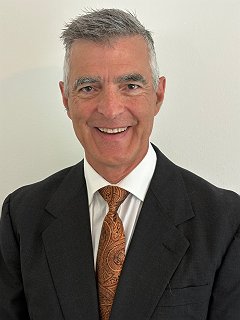 Kareem Badaruddin Kareem Badaruddin is the Mission Manager of the Voyager Interstellar Mission. He has been at JPL since 1994 and has served in line management as well as roles on Cassini, Dawn, SMAP, and various proposals and costing exercises. Kareem has an extensive background in flight system testbeds and in-flight anomaly investigation and resolution. He has demonstrated strong technical leadership in addressing serious anomalies that could have resulted in the loss of a spacecraft. He was fortunate to rely on the exceptional skill and creativity of the Voyager flight team as well as the expert JPL anomaly teams. View Profile |
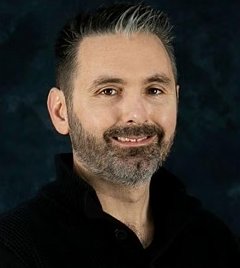 Chris Mattmann Chris Mattmann is UCLA’s inaugural chief data and artificial intelligence officer. The position is the first of its kind at any University of California campus and one of just a few at universities in the U.S. Chris joins UCLA from the NASA Jet Propulsion Laboratory (JPL) where he was the Chief Technology & Innovation Officer. Chris has an established track record of conducting award-winning innovative use of technology and data throughout his career. As a Principal Scientist at JPL, he created the next-generation data processing systems used in NASA’s Orbiting Carbon Observatory and other earth science missions. Chris’ work has been funded by NASA, the Defense Advanced Research Projects Agency (DARPA), the National Science Foundation (NSF), the National Institutes of Health (NIH), and private industry. He also contributed to open-source technology development and was a member of the Board of Directors at the Apache Software Foundation (2013-18). View Profile |
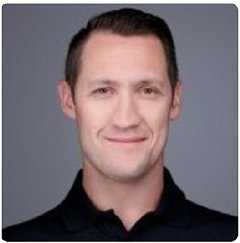 Adam Thurn Adam Thurn is the Chief Engineer for Space Missions at Anduril Industries focusing on providing technical oversight and direction in advanced space capabilities for the organization. Prior to joining Anduril, Adam served as the VP of Engineering for Terran Orbital and Tyvak overseeing all engineering functions for the various spacecraft missions including NASA's CAPSTONE and the SDA's Tranche 0 and Tranche 1 Transport Layer. He also served as a Spacecraft Mechanism Engineer while working for the Naval Research Laboratory and holds several patents across reusable burn wire release mechanisms and fluid transfer mechanisms for space applications. Adam holds a B.S. in Aerospace Engineering from the University of Cincinnati. View Profile |
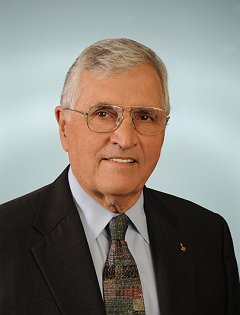 Harrison Schmitt Harrison Hagan Schmitt landed in the Valley of Taurus-Littrow as the only scientist and the last of 12 men to step on the Moon during the Apollo Program. Schmitt consults with a number of commercial and governmental entities on aerospace and Earth and space science issues. He also continues to participate in research and publications related to his December 1972 exploration of the valley of Taurus-Littrow on the Moon. Significant portions of his ongoing activity relates to the integration of 50 years of reported analytical research on lunar samples with the photographs and observations he made during the Apollo 17 mission. Receiving his Bachelor of Science degree from Caltech, Schmitt studied as a Fulbright Scholar at the University of Oslo, Norway, and attended graduate school at Harvard University. Geological field studies in Norway in 1957-58 and 1960 formed the basis of his Ph.D. from Harvard in 1964. His geological fieldwork on behalf of corporate clients and the United States Geological Survey included projects in California, Alaska, Montana, Arizona, and New England as well as the Moon. View Profile |
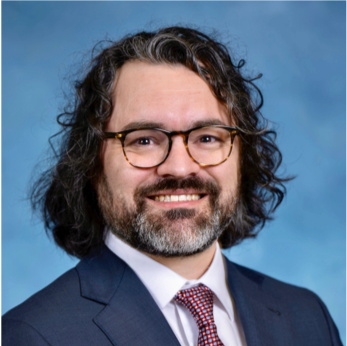 Ian Maddox Ian Maddox is the acting Communications Lead for the newly-announced Armstrong Lunar Outpost developed by NASA’s Moon Base Program, responsible for the implementation of communications, navigation, networking, data, and imagery capabilities for humanity’s first outpost on another world. Previously he has served as the Chief Engineer for NASA’s Space Communications and Navigation Program (SCaN), as the lead engineer for Earth Independent Operations in the Mars Campaign Office, as the Issue Resolution Lead for the Artemis Campaign, and in a number of technical and systems engineering leadership roles over 16 years supporting NASA’s human spaceflight mission. |
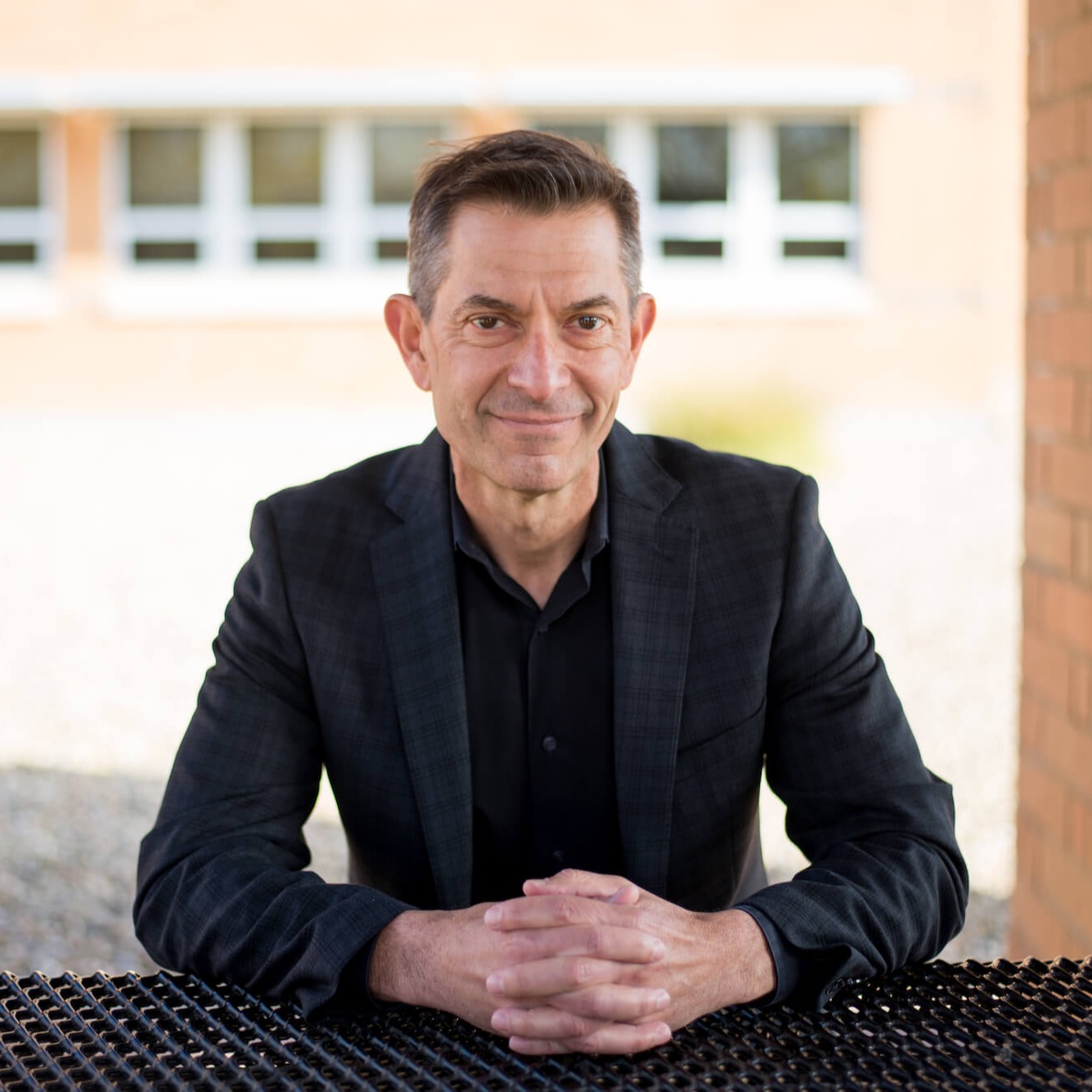 Steve Butow Steven J. “Bucky” Butow is Senior Advisor to the Director and an Executive Committee Member at the Defense Innovation Unit (DIU). A founding member of DIUx in 2015, he helped establish DIU’s Silicon Valley, Boston, and Austin offices and has served as the organization’s Space Portfolio Director and Military Deputy. In his reserve capacity, Major General Butow commands the California Air National Guard, leading approximately 4,900 Airmen across five wings and a headquarters staff. He also serves as a senior advisor to General Michael Gutlein on the GOLDEN DOME of AMERICA program. Previously, he commanded the 129th Rescue Wing at Moffett Federal Airfield, CA and held key personnel recovery and search-and-rescue leadership roles supporting operations in Iraq and Afghanistan. He has logged more than 3,500 flight hours in multiple aircraft. Before joining DIU, Butow served as Vice Chief of the Joint Staff for the California Military Department. Earlier in his career, he conducted Mars and astrobiology research at NASA Ames Research Center and earned recognition for his scientific contributions. He holds degrees from San Jose State University and the University of Marylan, has completed executive education at Harvard's John F. Kennedy School of Government, and was a member of the National Leadership Preparedness Initiative (NPLI) Cohort 16. View Profile |
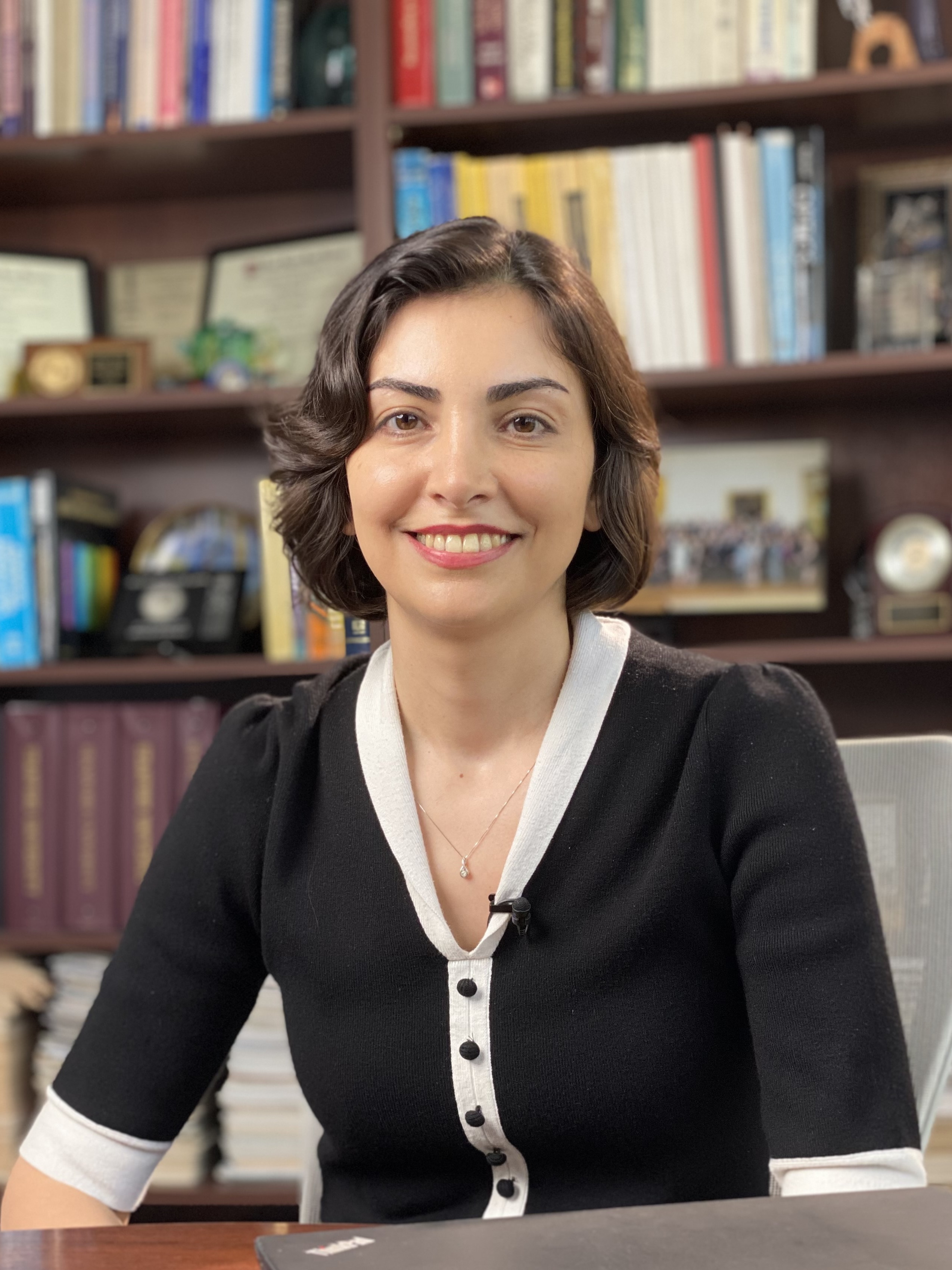 Mona Jarrahi Mona Jarrahi is Professor and Northrop Grumman Endowed Chair in Electrical and Computer Engineering at the University of California, Los Angeles, where she also directs the Terahertz Electronics Laboratory. She earned her B.S. in Electrical Engineering from Sharif University of Technology and her M.S. and Ph.D. from Stanford University, followed by a postdoctoral appointment at University of California, Berkeley. After serving on the faculty at the University of Michigan, she joined UCLA in 2013. Jarrahi is a leading researcher in ultrafast electronic and optoelectronic devices and integrated systems for terahertz, infrared, and millimeter-wave sensing, imaging, computing, and communications. Her work spans novel materials, plasmonic nanostructures, and quantum structures, and has produced more than 400 publications and 280 invited talks. Her contributions have earned numerous honors and prestigious awards. View Profile |
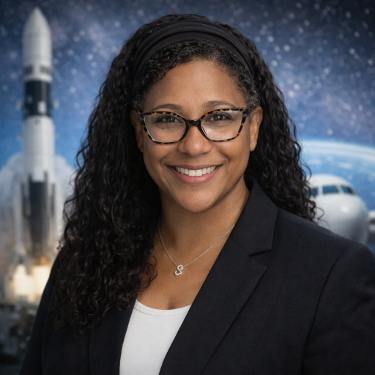 Melanie Berg Mrs. Melanie Berg has over 30-years of experience as a designer, verification engineer, instructor, and reviewer for ASIC and FPGA applications. Her more visible accomplishments are her contributions to the FPGA designs for the NASA sponsored New Horizons Pluto and Beyond Mission; and her research/development in mitigation strategies. Melanie is the founder of Space R3 LLC and is a former member of the Radiation Effects and Analysis group at NASA/GSFC. She has published and presented several papers regarding: ionization and microelectronic error-response characterization, reliable synchronous design methodology, robust verification techniques, mitigation strategies for critical circuitry, reliability/survivability prediction calculations, and hardness assurance for space flight systems. View Profile |
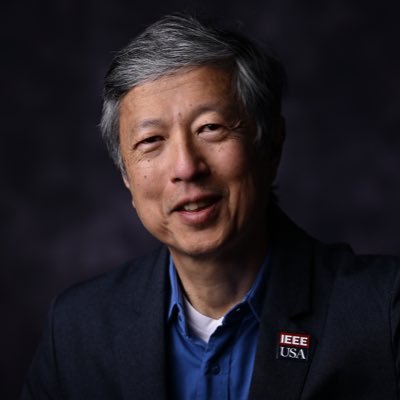 Tim Lee Timothy Lee, a Boeing Technical Fellow based in Southern CA, leads the development of disruptive microelectronics technologies for advanced communications networks and sensor systems for airborne and space applications. His current research interests include heterogenous integration (Advanced Packaging), silicon Application Specific Integrated Circuits (ASICs) and gallium nitride Monolithic Microwave Integrated Circuits (MMICs). He led the development of hardware for satellite communications and has built phased-array antenna electronics for commercial and US government customers. He is an active volunteer in the IEEE. He is IEEE-USA Past President; seeking collaboration on technology policy for R&D, STEM education and Workforce Development. Previous roles includes IEEE Board of Directors (2021-2022 Region 6) and past President of the IEEE Microwave Theory and Technology Society (MTT-S). He leads several Technical Working Groups in the IEEE Heterogenous Integration Roadmap (HIR) and was the Vice-Chair in the IEEE Future Networks Technical Community. View Profile |
| Platinum | |
| Platinum | |
| Platinum | |
| Platinum | |
| Platinum | |
| Platinum | |
| Platinum | |
| Platinum | |
| Platinum | |
| Gold | |
| Gold | |
| Gold | |
| Gold | |
| Gold | |
| Gold | |
| Gold | |
| Gold | |
| Silver | |
| Silver | |
| Silver | |
| Academic | |
| Academic | |
| Academic | |
| Academic |